Borneo: Visit this Vanishing Wildlife Paradise Before It's Gone
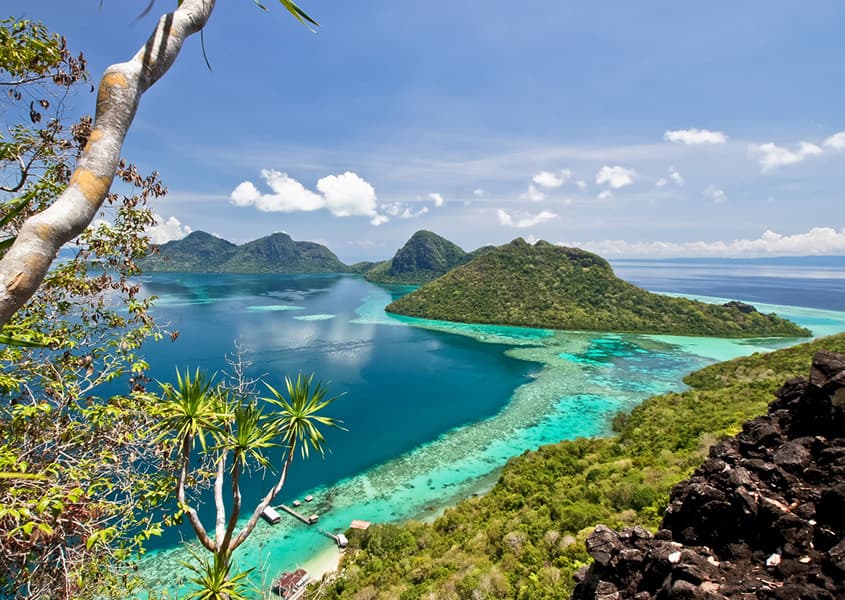
On a wildlife cruise on Borneo's crocodile-infested Kinabatangan River, I scanned the trees along the shore for the critically endangered orangutan, the world's largest tree-dwelling creature that can only be found in the wild in the rainforests of Borneo and Sumatra, two islands in the Malay Archipelago. Our guide from Borneo Nature Lodge, an eco-friendly property in the Malaysian state of Sabah, detected a ruckus in a cluster of mangrove trees, so he navigated the small metal boat closer to shore.
Primates called to each other, swinging wildly through the branches, but it was a troop of about 30 long-tailed macaque monkeys, not their much larger cousin that weighs between 80 and 220 pounds. There's a strict social hierarchy among monkeys, and I was close enough to see those in the lower ranks chatter their teeth to their superiors, a submissive behavior.
This happens frequently in Borneo, a giant island in southeast Asia shared by three countries: Indonesia, Brunei, and Malaysia. You set out hoping to see specific flora or fauna and come across something completely different but equally fascinating.
After getting our monkey photos, we glided into the orange-purple twilight hoping to witness one more marvel of nature in this ancient rainforest, among the most biodiverse ecosystems on the planet, before the darkness and mosquitos descended. We didn't have to wait long.
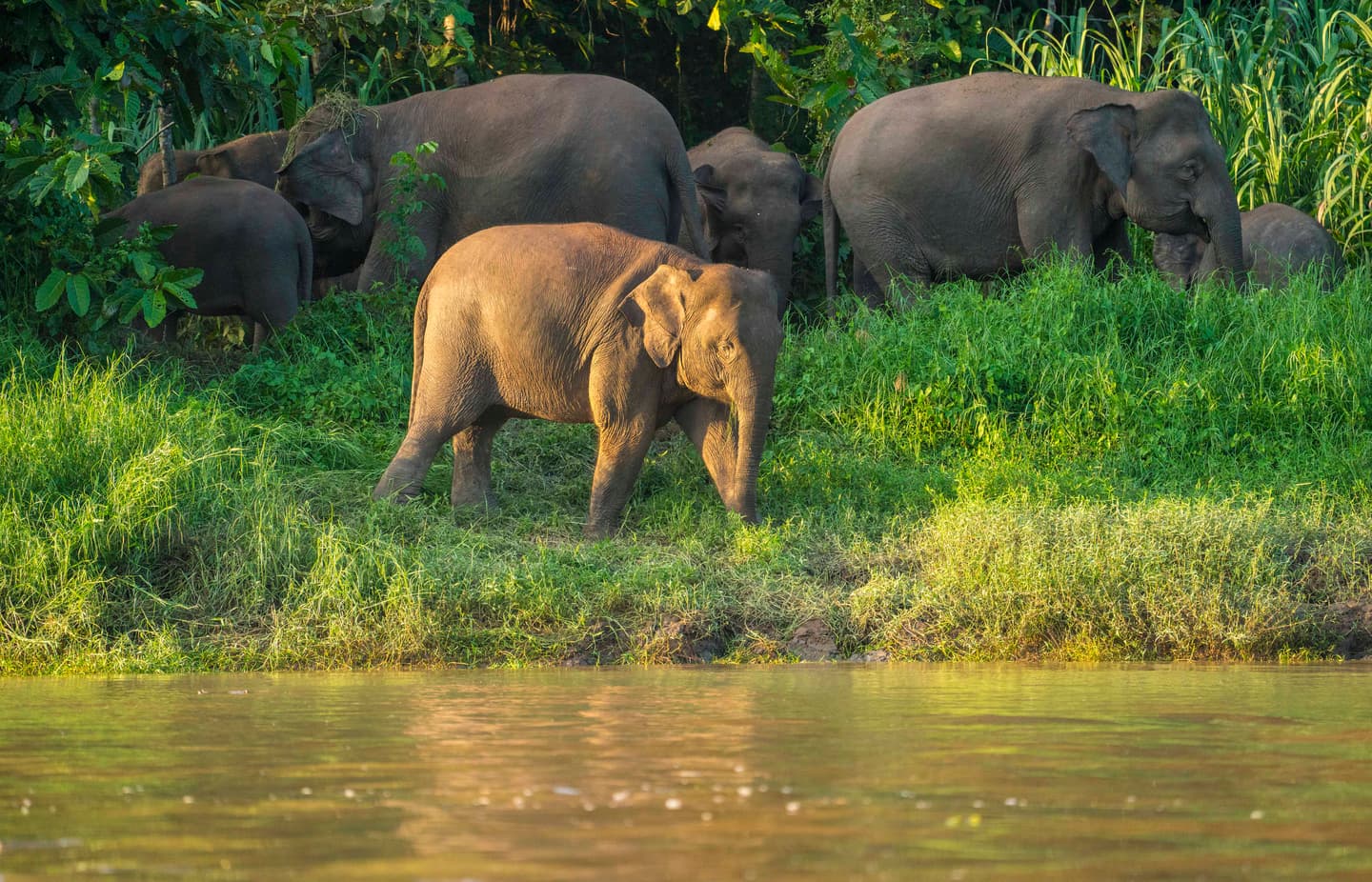
The chorus of haunting calls and high-pitched whistles produced by hundreds of species of birds and insects was interrupted by interlopers that raucously trumpeted above the din. The source of the commotion emerged trunk-first from behind a verdant curtain of vines.
A chain of Bornean pygmy elephants, including mothers and calves, submerged themselves in the muddy river for an evening swim, using their trunks as a snorkel until they made it to the opposite riverbank. This endangered species is the smallest elephant in the world, but despite the word "pygmy " in their name, they can weigh up to 11,000 pounds, making them the largest mammals in Borneo.
Wondrous sights like this are becoming increasingly rare because much of this 130-million-year-old rainforest has been burned down to make room for highly profitable industrial palm oil plantations that sprawl across millions of acres. It's little wonder I never spotted the arboreal orangutan on my wildlife cruise. The population has decreased 82% since 1950.
Nascent efforts to revolutionize the palm oil industry by implementing sustainability standards are moving slowly as more of this paradise is lost every day. So if you've ever contemplated an adventure in the wilds of Borneo, now is the time to go.
How to Best Experience Wildlife in Borneo
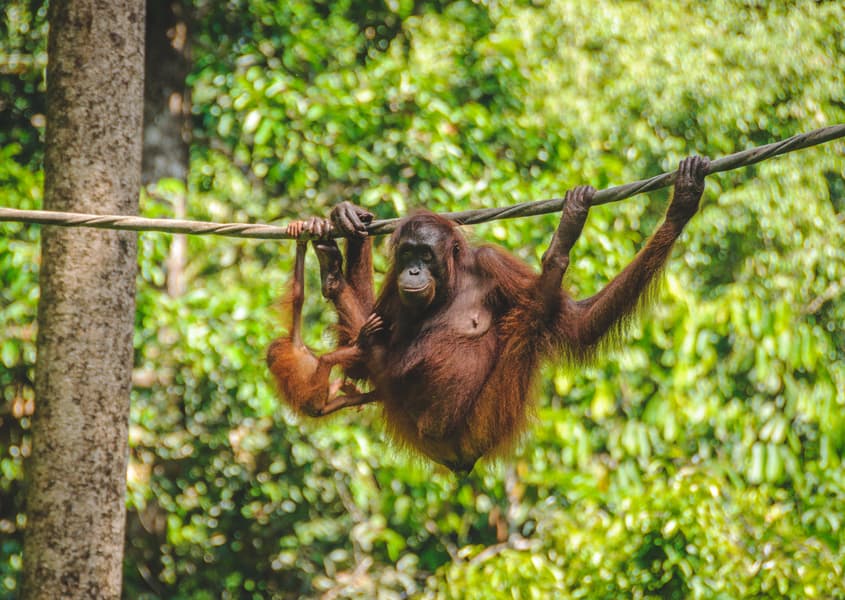
The good news is that there's an orangutan sanctuary on the island, among refuges for other vulnerable animals, where some of the primates are being rehabilitated — and where travelers can catch a glimpse of them.
Sepilok Orangutan Rehabilitation Centre was founded in 1964 in the heart of the Kabili-Sepilok Forest Reserve, the first facility of its kind in the world. This sanctuary treats injured orangutans and protects the orphaned, returning the creatures to the wild when possible. Feeding time is the best time to observe them.
Next door is the Bornean Sun Bear Conservation Centre, a rehabilitation and rescue facility for the world's smallest bear, which is listed as vulnerable. Not only are sun bears threatened by habitat loss, they are poached for body parts that are prized in traditional Chinese medicine. Cubs are sometimes illegally captured and kept as pets. These bears are loners by nature, but at the conservation center, they play games in the forested enclosure, rolling along the jungle floor and chasing each other up trees.
Explore the rainforest canopy if you dare. The Rainforest Skywalk at the Rainforest Discovery Centre rises 88 feet from the forest floor at its highest point, so it's not for the faint of heart. It's the perfect vantage point for bird watchers hoping to spot the crested serpent eagle or the elusive Bornean bristlehead.
Other Things to Do in Borneo
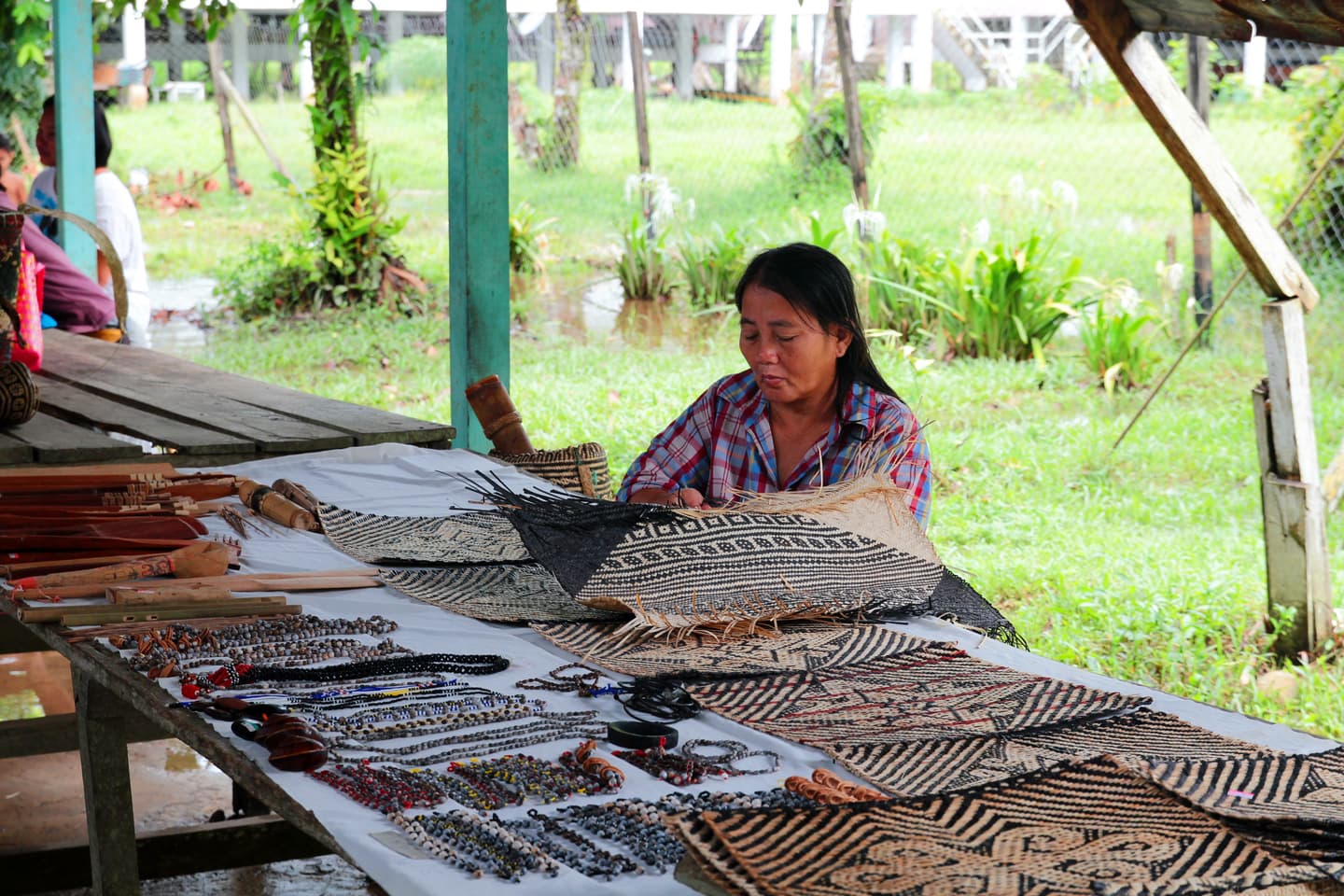
Exotic animals aren't the only reason to visit Borneo. The Borneo Cultures Museum in Kuching, the capital of the Malaysian state of Sarawak, is the largest and newest museum in Malaysia. The heritage of Borneo's diverse ethnic groups unfolds in four sprawling galleries: Love our Rivers, In Harmony with Nature, Time Changes, and Objects of Desire. Highlights include an Iban war boat, a collection of ceremonial masks, and wedding attire worn by various ethnicities.
Borneo's Indigenous peoples come to life at the Sarawak Cultural Village. This living history museum comprises houses representing the traditions of Sarawak's major ethnic groups. Stroll through an elevated longhouse, a communal dwelling favored by the Iban, where women in traditional clothing demonstrate weaving techniques. Replicas of human skulls hang in the corner, a reminder the Iban were once a fierce tribe of headhunters. Other points of interest are the Orang Ulu longhouse that showcases the tribe's beadwork skills, and the Melanau tall house that offers a glimpse of Melanau spiritual practices.
For local handicrafts and antiques, head to Main Bazaar in Kuching, the main thoroughfare along the Sarawak River. Take home treasures such as an antique Chinese medicine bottle or a handwoven bag.
Where to Eat
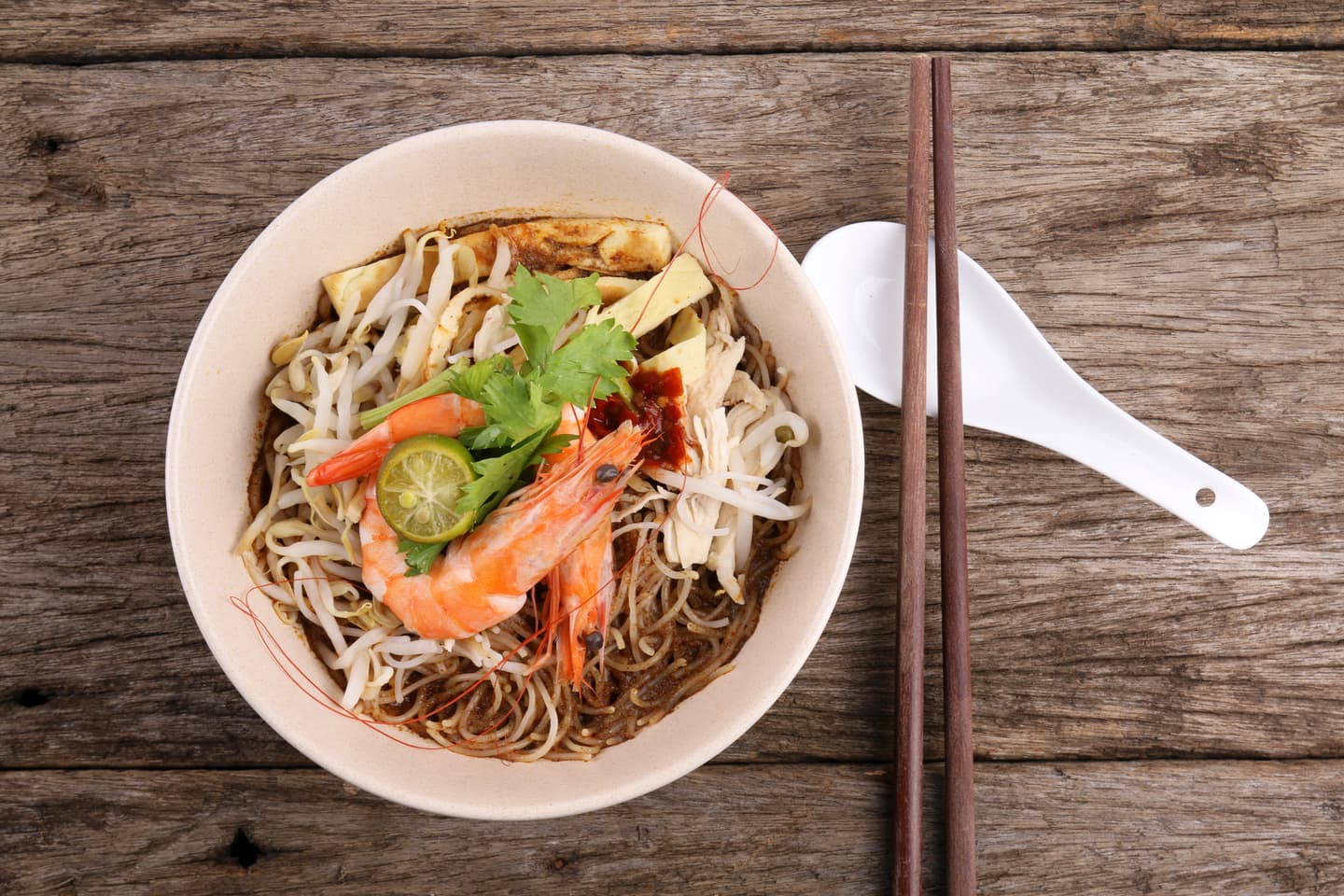
Most travelers start their jungle adventure in Kuching, the gateway to the rest of Borneo. The city is a melting pot of ethnicities and Indigenous tribes, and that diversity is reflected in the cuisine.
In 2021, Kuching was recognized by UNESCO as a Creative City of Gastronomy, the first city in Malaysia to receive the honor. Kick off your culinary journey at Topspot Food Court (off Jln Padungan), a collection of rooftop restaurants touted for their seafood specialties, such as crabs served with ginger soy sauce, barbecue stingray, and prawns in chili sauce.
For a one-of-kind dining experience, make a reservation at Lepau (99, Jalan Ban Hock, Road), a restaurant best described as tribal fusion. Owner Livan Lah is a member of a highland tribe called the Kayan, and she serves the flavors of her childhood alongside other traditional kampong (rural village) dishes. Order a starter of umai, sliced raw fish, followed by an entrée of pansuh, a chicken-filled bamboo stalk.
At some point, your journey will likely take you to Sandakan, a Malaysian city on the northeast coast of Borneo. That's where you'll find The English Tea House & Restaurant, which offers a taste of Malaysia's colonial past. Enjoy an elegant afternoon tea with scones and sandwiches, or for more hearty British fare, dig into a plate of shepherd's pie.
Where to Stay
The Sabah Hotel in Sandakan serves as a base for those who want to return to the comfort of a hotel instead of a nature lodge after a long, hot day of exploring. From this 114-room property nestled in the tropical rainforest, it's only a 25-minute ride to the Sepilok Orangutan Rehabilitation Centre and the Bornean Sun Bear Conservation Centre.
In Kuching, check in to The Waterfront Hotel, a five-star boutique hotel overlooking the Sarawak River that's perched on top of the Plaza Merdeka shopping mall. From there, it's a short ride to many of the city's top attractions, including the Borneo Cultures Museum.
For accommodations in the heart of the Borneo jungle, Borneo Nature Lodge provides an eco-friendly stay and tours that promote responsible tourism. Another eco-friendly option deep in the rainforest is the Sukau Rainforest Lodge. Guests can choose between overland tours and those that sail on the Kinabatangan River.
How to Get There
The most popular route is a 17-hour flight from San Francisco into Kota Kinabalu, the capital of the Malaysian state of Sabah. Air Asia, Firefly, and Malaysia Airlines make the 1.5 hour-flight from Kota Kinabalu to Kuching.
When to Go
The best time to visit Borneo for wildlife spotting and jungle treks is between March and October, the drier months. The rainy season is November to February with the highest rainfall during December and January. The shoulder seasons, from March to early May and from September to early November are the best times to visit for a balance of lower prices, fewer crowds, and decent weather.
Know Before You Go
-
For a jungle trek, you will need "leech socks " that go over your pants and tuck into your hiking shoes or boots. They prevent the creepy bloodsuckers from worming their way in through the opening of your pants.
-
Choose your footwear carefully. Shoes or boots that are weatherproof and provide good traction on slippery surfaces are a must.
-
The tropical sun is fierce, so bring a hat and sunscreen. Drink water even if you're not thirsty. Dehydration can come on fast in this humid climate.
Combine With
While in Southeast Asia, consider a detour to George Town, the capital of the Malaysian state of Penang and a UNESCO World Heritage Site. Stroll among the unique amalgam of architecture that has sprung from the Malay, Chinese, and Indian cultures that have each left an indelible mark on the city. Mosques are only a stone's throw from Indian and Buddhist temples. Sino-European shophouses are remnants of the city's colonial era.
Latest Articles
8 Bucket List Destinations You Can Cruise to on a Budget
The Best Cruises To Celebrate America’s 250th

10 Tips for Getting the Best Cruise Deals During Wave Season
Why Booking Repositioning Cruises Is a Savvy Move — and the Best Ones To Snag This Spring
Everything You Need To Know Before Chartering Your First Yacht — Which Can Be a Better Deal Than a Mainstream Cruise