Everything You Need To Know About Forest Bathing
I'll admit, I was skeptical. As an avid hiker and lover of the outdoors, I enjoy adrenaline-pumping activities. I've hiked the Inca Trail in Peru, traversed Torres del Paine National Park in Patagonia, Chile, and rafted the Zambezi River near Victoria Falls in Zimbabwe. Plus, there's sky diving, hang gliding, bungee jumping, and scuba diving — activities I've done all over the world.
So, I wasn't sure if forest bathing was my thing. I had a strange notion that it involved walking naked in the forest (the word "bathing" usually means sans clothes).
"If you walk slowly in the forest and really notice what's around you, that's forest bathing," said my guide Junichi Aida, who has been leading hikes in Yakushima's forest in Japan for over 27 years.
The term forest bathing, known as shinrin-yoku in Japanese, was coined in the 1980s. The concept was a response to Japan's technological revolution — shinrin-yoku provided an antidote to the high-octane lifestyle that was replacing a traditionally nature-oriented society.
So what is forest bathing? Aida explains it's quite simple. It's being in nature and tuning in to the sounds, smells, sights, and energy of your surroundings. It's being present and mindful as you "bathe" in the forest.
Forest bathing has become a vital part of healthcare in Japan. Aida notes that studies have shown that forest bathing improves sleep, mood, and the ability to focus, and that it lowers stress levels. Chronic stress, as many of us know, can contribute to a plethora of conditions including anxiety, depression, high blood pressure, and lowered immune response.
Spending time in nature, away from our gadgets, improves both our physical and mental health by reducing the effects of stress on our bodies. Prescribed forest bathing in Japan has led to a healthier lifestyle for people of all ages.
I remained skeptical. What I love most about being outdoors is the physical aspect — feeling my muscles tired but exhilarated, having a sense of success and accomplishment. Forest bathing, on the other hand, sounded like a more mental exercise.
I embarked on a full-day (eight-hour) hike in one of Japan's most picturesque national parks, Yakushima, with Aida. Normally, when I hike, I like to talk — talking makes the time go by faster and makes it feel like I'm getting to my destination quicker. But Aida encouraged me to spend at least half the time walking in silence. He encouraged me to be in my head (a place I wasn't sure I was comfortable being).
Instead of running my mouth, I started tuning in. I'm often uncomfortable with quiet but here I was, embracing it. And that's when I realized it wasn't quiet at all, the forest was very much having an active conversation around me, but one I had never listened to. I started paying attention to my breathing, hearing the sound of leaves crunching under my feet.
I realized maybe forest bathing was my thing. Maybe making a conscious effort to spend time in nature, slow down, and take in my surroundings was exactly what I needed. I realized it wasn't just physically slowing down, it was mentally doing so. My mind was always worrying about the future or questioning things I've done in the past. But encouraging my mind to take in what was right in front of me and shutting down worries about the past and future (at least for the duration of my forest bathing) brought me a deep sense of calm.
What's great about forest bathing is you can do it anywhere. People unfamiliar with the practice often start out going with a guide, who is mostly there for comfort — especially if you fear getting lost — but can also provide prompts along the way… what do you feel, what do you see, what do you hear, what do you smell?
While Aida has been leading guided forest bathing hikes for decades, he explains that people can do shinrin-yoku on their own. He explains that you go for a walk in nature and tune into your five senses — watch the leaves of the trees dance in the wind, listen to the twigs crack as you walk, feel the warmth of the sun on your face, smell the cedar woods, taste the fresh air.
"You can't do forest bathing wrong," says Aida. "If your mind starts wandering, just bring it back to the present, and do that as often as you need to."
Top places to go forest bathing
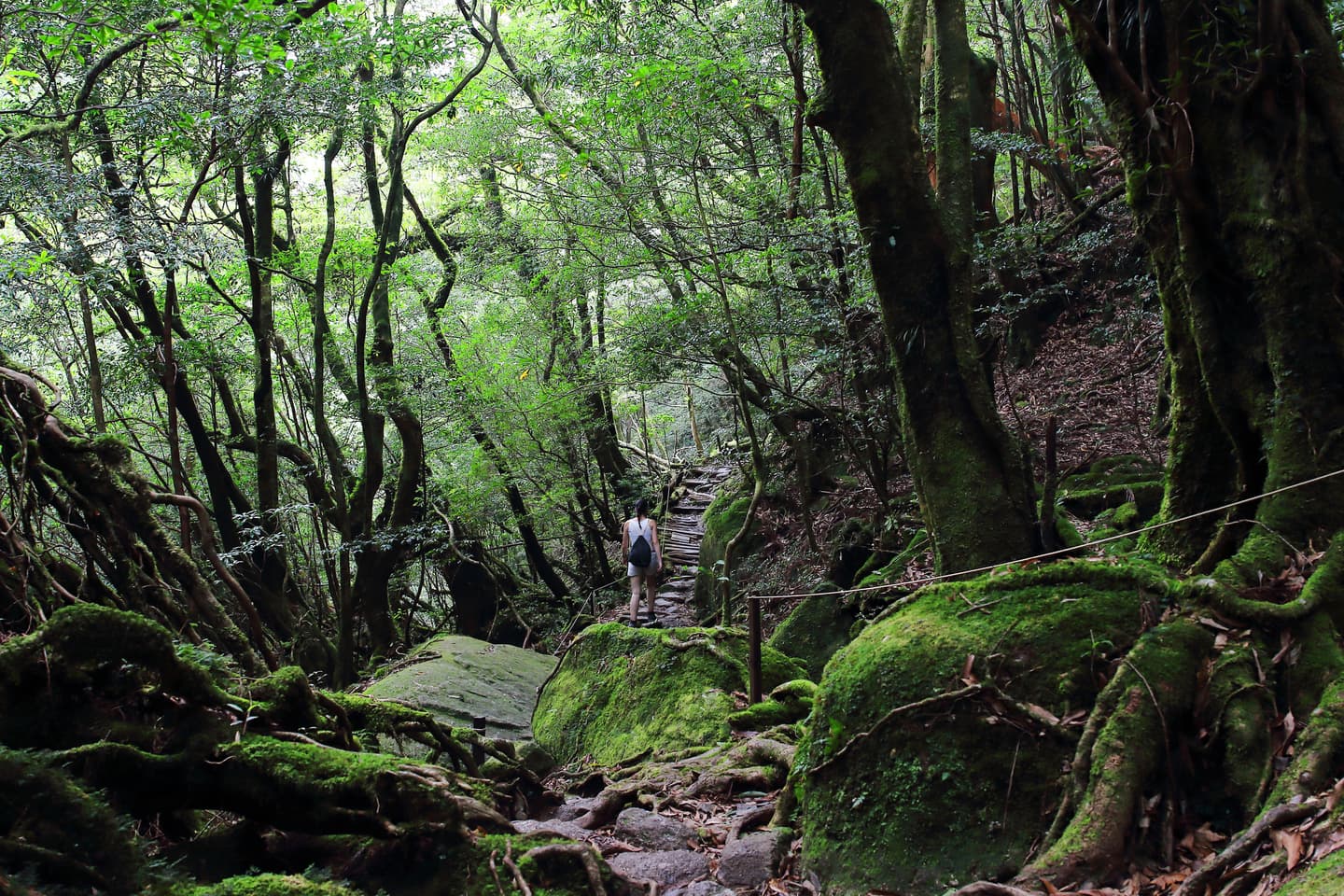
Yakushima, a UNESCO World Heritage Site, stands out as a top forest bathing spot in Japan. Located in the southwestern part of the country, this national park has incredibly scenic trails. It is mountainous and covered with dense forests made of ancient cedar trees known as yakusugi. You can hike among laurel forests on the lower foothills, which give way to mixed coniferous and deciduous woodlands on the upper slopes. Woodland in turn gives way to shrub and dwarf bamboo on the rocky granite outcrops and weathered ridges nearer the summit. It feels like hiking in a fairy tale. Yakushima Geographic Tour has been offering forest bathing hiking experiences for over two decades.
A popular self-guided tour in Japan (called Japanese Ikigai and the Path to Happiness) includes forest bathing along the tranquil trees of the Nakasendo Samurai Route (a 335-mile mountainous inland route that once connected present-day Tokyo with Kyoto). This spiritual and wellness-inspired journey also includes experiencing wabi-sabi (the notion of accepting imperfections) at a workshop for kintsugi golden ceramic repair in Tokyo; as well as the concept of onkochishin (finding new wisdom in old ways) as travelers partake in a zazen seated meditation in Kyoto.
Of course, while forest bathing originated in Japan, it can be done anywhere in the world.
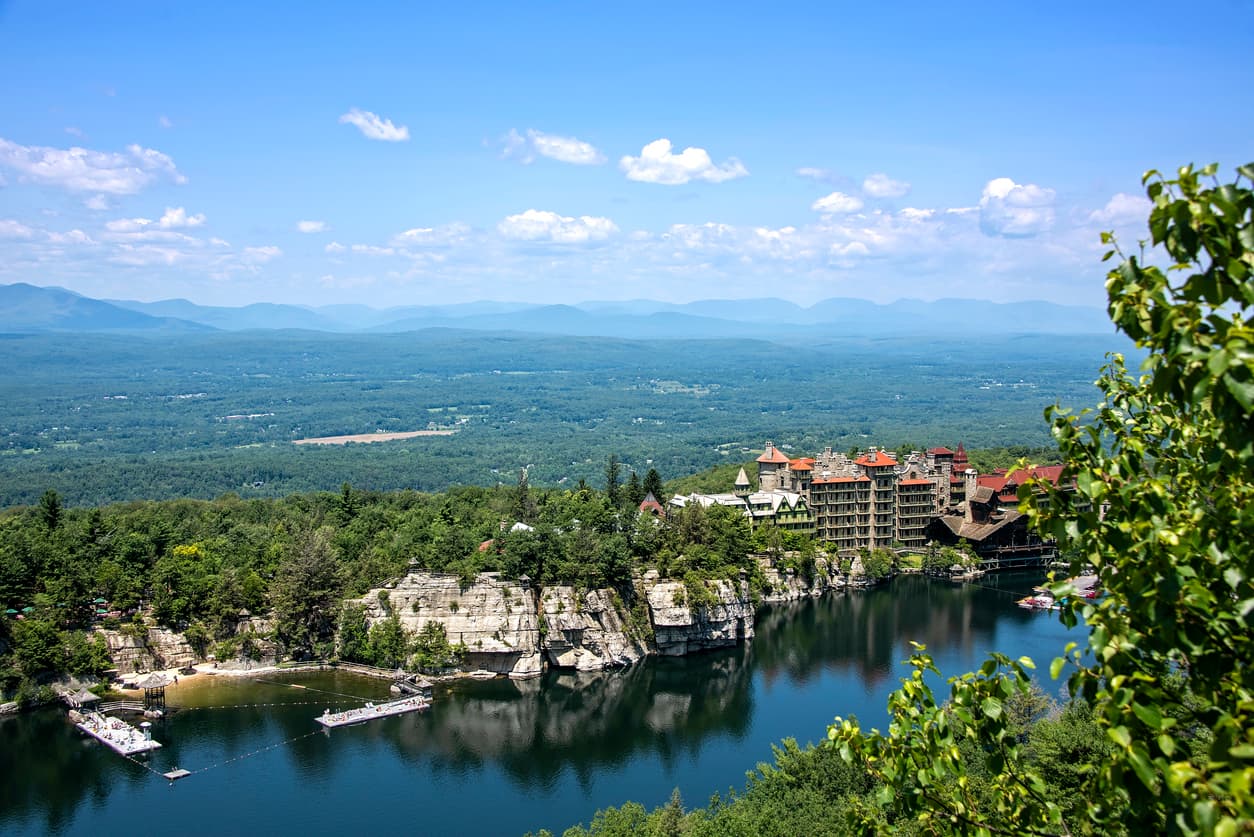
Most wellness and destination spas offer forest bathing as part of their itinerary. Popular places to take a forest bathing class include The Lodge at Woodloch in Pennsylvania, Mohonk Mountain House in New York, Art of Living in North Carolina, Miraval in the Berkshires, and Canyon Ranch in Arizona. You can also turn any hike into a forest bathing experience by tuning into your five senses and turning off the monkey mind.
Germany has a similar concept, named waldbaden or waldeinsamkeit. It's spending time in nature and tuning into your surroundings. It's popular throughout the country, including in the Black Forest, where guided walks are available.
Latest Articles
The World's Best Destinations for Fall Foliage
8 Bucket List Destinations You Can Cruise to on a Budget

The Best Cruises To Celebrate America’s 250th

10 Tips for Getting the Best Cruise Deals During Wave Season
Why Booking Repositioning Cruises Is a Savvy Move — and the Best Ones To Snag This Spring