Everything You Need to Know About Seasickness on a Cruise — And How to Avoid It

For many first-time cruisers, seasickness is a very real concern. But with today’s massive ships and high-tech stabilizers that keep things steady even in choppy waters, there's really not all that much to worry about, especially if you take a few simple precautions. Here, we break down everything you need to know about seasickness on cruise ships, along with expert tips and insights to ensure, well, smooth sailing.
What is Seasickness?
According to Bahar Adeli, MD, a spokesperson for the American Gastroenterological Association (AGA), seasickness is a form of motion sickness that's "characterized by symptoms like nausea, dizziness, and discomfort." Per the pro, it stems from "conflicting signals your senses send to your brain when you're at sea." For example, your inner ear can tell you’re moving, but your eyes insist you’re not — a disconnect that leaves your brain confused and your stomach queasy.
What You Need to Know About Seasickness on a Cruise
It varies from person to person
"Seasickness is a concern for many first-time cruisers, and it's vital to evaluate your susceptibility before setting sail," says Dr. Adeli. She continues, telling ShermansTravel, "Keep in mind that susceptibility varies from person to person, with those who experience motion sickness on land, such as in cars, buses, trains, or planes, being more prone to seasickness." Additionally, certain folks — like children under the age of two, migraine sufferers, and pregnant people — are more susceptible to seasickness, as well.
It's preventable
Dr. Adeli explains that "planning ahead and taking necessary precautions can help ensure a smoother cruise experience." While there are over-the-counter medications that can help — including dimenhydrinate (e.g., Dramamine), meclizine (e.g., Antivert), and diphenhydramine (e.g., Benadryl) — the doctor recommends consulting with your primary care physician, as these drugs can be sedating and may interact with other medications or have side effects. However, if your doctor is on board (pun intended, of course), she says that taking a first dose of an anti-nausea medication before boarding the ship can "significantly reduce the risk of seasickness."
It's less common on larger ships
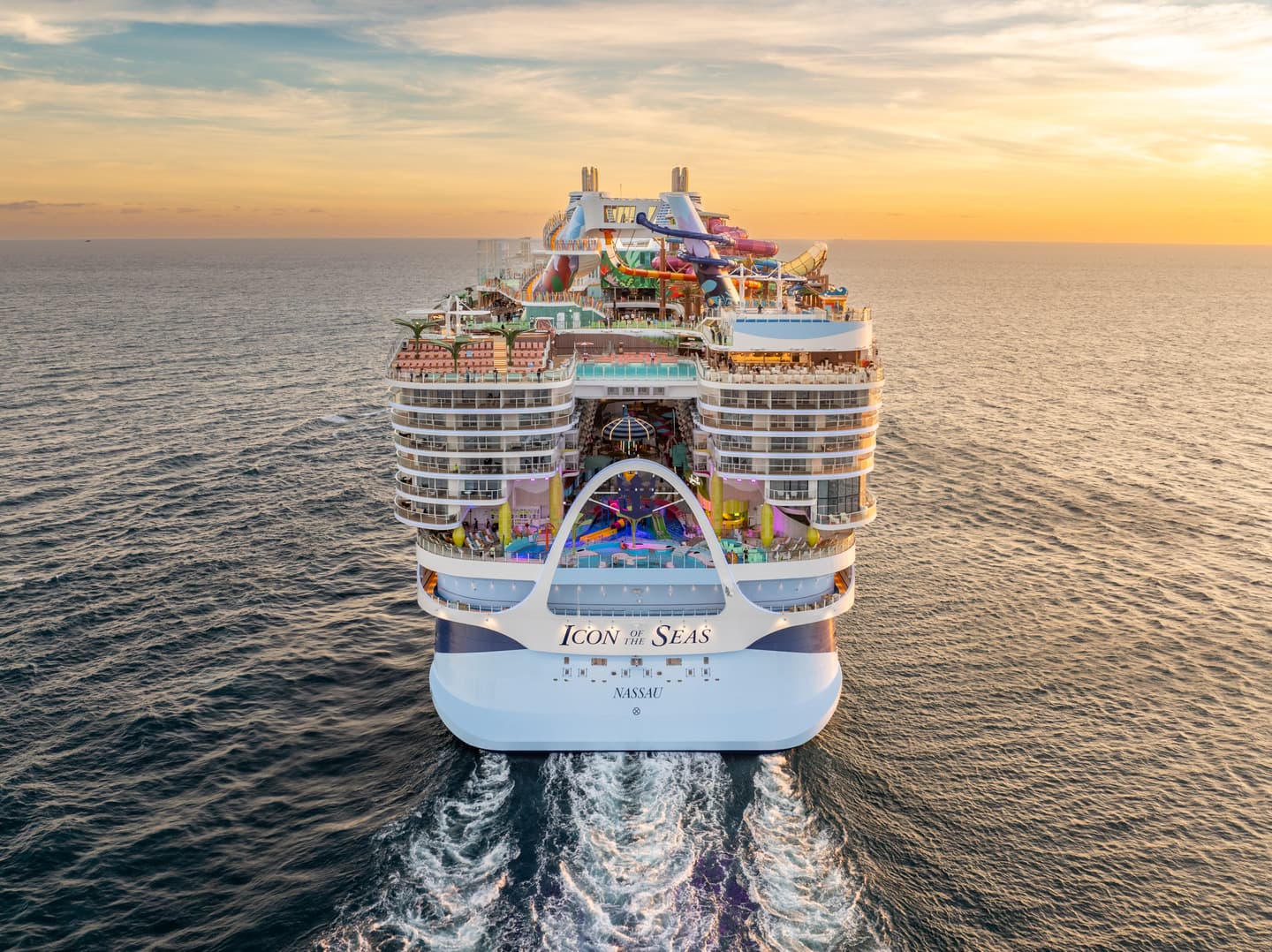
"Seasickness can be mitigated by choosing larger ships equipped with advanced stabilizers, especially for longer voyages," says Dr. Adeli. For example, according to its website, Royal Caribbean megaships all "use stabilizers — fins built off a ship's port and starboard sides along the water line — to reduce side-to-side motion so most guests never experience any motion sickness."
Meanwhile, on its website, Celebrity Cruises recommends those who are prone to seasickness set sail on one of the line's Solstice-class ships — Celebrity Solstice, Celebrity Silhouette, Celebrity Equinox, Celebrity Eclipse, and Celebrity Reflection — since they're specially "built for smooth sailings with fin-like stabilizers mounted between the ship's waterline."
While stabilizers reduce side-by-side movement, they may not entirely eliminate seasickness symptoms. The vessel can still move up and down (fore and aft). Known as the vessel's pitch, the only "fix" to this is if the captain and their team manually change the ship's course to avoid rough weather or particularly strong swells.
Do's and Don'ts That Will Help Mitigate or Prevent Seasickness
DO: Choose a cabin in the middle of the ship
If you're worried about seasickness, consider selecting a cabin in the center of the ship and in the middle of the decks, where, per Dr. Adeli, "motion is least pronounced."
DON'T: Read or stare at screens when in motion
According to Dr. Adeli, these actions can exacerbate seasickness. Instead, she recommends getting fresh air "while facing the direction of travel and focusing on a distant, stationary object or the horizon."
DO: Stay hydrated
Since seasickness can cause dehydration [both from vomiting and from not drinking enough fluids due to nausea], you'll want to take action to ensure you stay hydrated throughout your journey. Additionally, says Dr. Adeli, be sure to avoid "excessive coffee and alcohol, which can lead to dehydration and worsen symptoms."
DO: Steer clear of certain itineraries

"Selecting itineraries that avoid regions with rough weather can significantly reduce the likelihood of experiencing seasickness," explains Dr. Adeli. For example, traditional Antarctica cruises cross the Drake Passage, a notoriously rough journey. While the crossing isn't dangerous, it can certainly exacerbate seasickness. According to Quark Expeditions, "The collision of cold seawater from the south and warm seawater from the north creates powerful eddies in the Drake Passage, which combine with harsh winds and occasionally heavy storms, prompting the term, 'Drake Shake."
Fortunately, you don't have to brave the Drake Passage to see Antarctica anymore. Many cruise lines, including Quark Expeditions, Silversea Cruises, and Aurora Expeditions, now offer “fly-the-Drake” itineraries, where you hop a short flight from Chile to King George Island and start your Antarctic adventure without the stomach-churning sea days.
You may also consider steering clear of the Caribbean during hurricane season (June 1 through November 30). Similarly, typhoon season around Japan, Korea, and the Philippines runs from May through October, so if you're worried about seasickness, it's a good idea to book a sailing outside these windows.
DO: Know your options
According to Dr. Adeli, seasickness interventions can be categorized into three groups: environmental (i.e., selecting a cabin in the center of the ship as opposed to one on the end), complementary/alternative (including acupressure bands like this, ginger chews, and ginger tea, which are common alternative therapies), or traditional medications (some of which are listed earlier in this piece). Dr. Adeli describes the latter — more specifically, prescription medications and antihistamines — as being the "most common and well-researched." Should you forget your prescription seasickness medication, don't fret: In the event of an emergency, most cruise ships have a medical facility on board.
The Bottom Line
While uncommon on most modern cruise ships, seasickness can be mitigated and even prevented entirely with a bit of planning.
Latest Articles

The World's Best Destinations for Fall Foliage

8 Bucket List Destinations You Can Cruise to on a Budget
The Best Cruises To Celebrate America’s 250th

10 Tips for Getting the Best Cruise Deals During Wave Season

Why Booking Repositioning Cruises Is a Savvy Move — and the Best Ones To Snag This Spring