
One of the last bits of civilization on the edge of the Strait of Magellan, this Chilean city has more to offer visitors than one might think. Punta Arenas, which was once the center of the late 19th-century wool trade, is home to a number of baronial mansions and atmospheric plazas, and offers access to the breathtaking landscapes of Patagonia.
Life at Port
See It for Yourself


What We Love
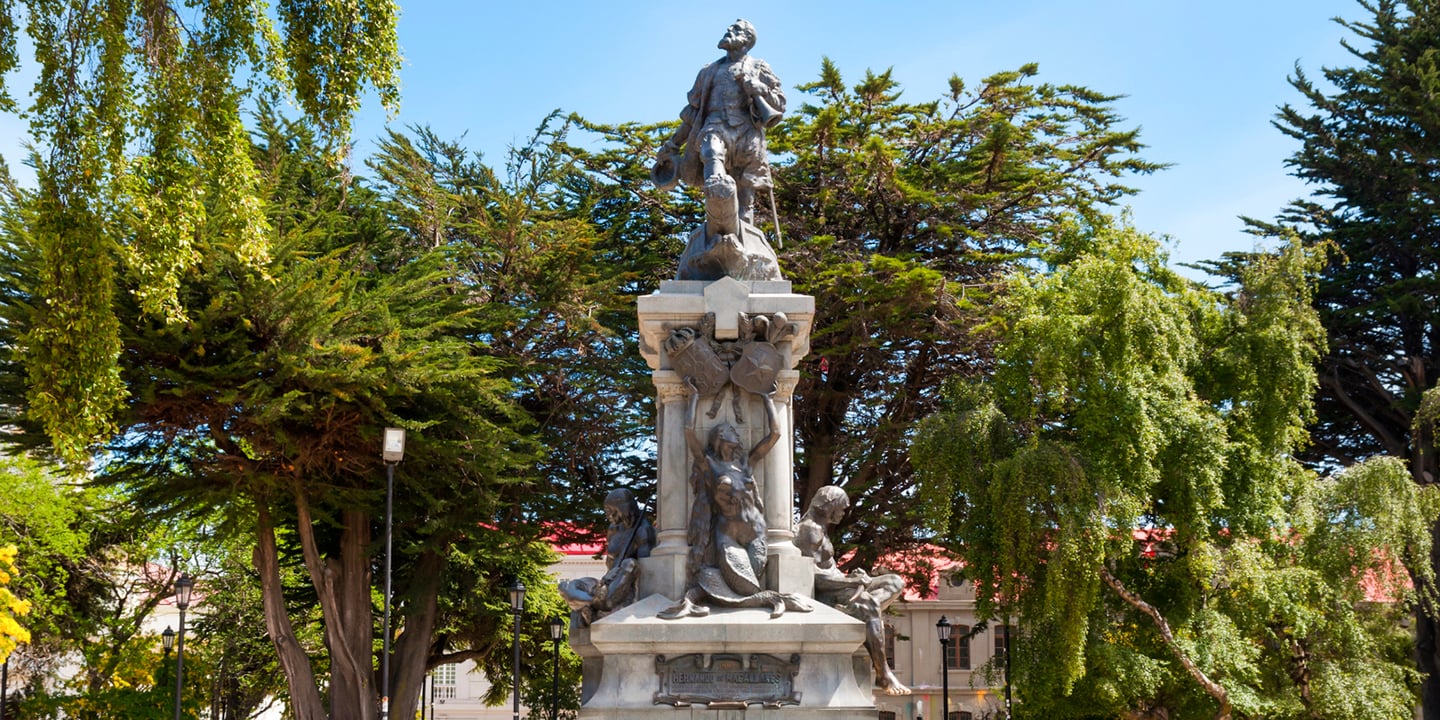
Magellan Memorial: Erected in Plaza de Armas in 1920 to honor the 400th anniversary of Portuguese explorer Ferdinand Magellan’s circumnavigation voyage, this memorial is part of a local legend: Touch the shiny toe of the native seated on its lower half, they say, and you’ll return to Punta Arenas.
Access to Torres del Paine: If you’ve traveled all the way to southern Chile, you must visit Torres del Paine National Park, one of South America’s, if not the world’s, most breathtaking places. A park tour is a daylong adventure, but well worth it as you soak up panoramas of craggy peaks, Windex-hued glaciers, and milky-blue lakes — and the fuzzy guanaco, grazing deer, and soaring condors that live there.
Best Known For
Penguins: About an hour outside Punta Arenas on Otway Sound, it’s possible to visit a colony of Magellanic penguins, where you can get up close to photograph the adorable, although stinky, waddling sea birds as they nest and swim.
Municipal Cemetery: It’s about a 15-minute walk to this architecturally fascinating burial ground. Established in 1894 and lined with manicured cypress trees, its elaborate mausoleums are the final resting place of not only the city’s benefactor Sara Braun, but also an international contingent of founding families who colonized the region.
Fresh Seafood: Casual restaurants offering fresh fish dishes, many with a South American twist, are a mainstay.
Who It's Good For
History Buffs and Nature Lovers: Either will find this isolated outpost intriguing.
Don't Say We Didn't Warn You
The Weather Can Be Unpredictable: Cool, wet, and windy are the norm, so dress in layers and don’t forget an umbrella.